



A playful AR experience that helped families celebrate Halloween safely by turning printable paper masks into interactive Instagram filters during early COVID.
CLIENT
Spark AR Filter Development | 3D Illustration
Google
scARy masks
We created scARy Masks, a Halloween experience that combined printable paper masks with custom Instagram AR filters. The physical mask designs acted as visual markers, triggering high-fidelity 3D character overlays in Spark AR and transforming simple DIY crafts into animated costumes on screen.
Our Solution
At the time, AR platforms did not support true mask-based tracking. Facial tracking relied on visible features like the nose and mouth, which physical masks completely obscured. To make the experience work, the solution needed to rethink how faces were tracked and how physical and digital layers could work together under real technical constraints.
Insight
Halloween 2020 arrived during the height of early COVID restrictions, when traditional trick-or-treating was discouraged and mask wearing had become a new reality for kids. Google wanted to make safety feel fun rather than restrictive, while creating an experience families could enjoy at home and share socially.
Challenge


scARy Masks was developed as a family-friendly campaign designed to bring some joy back to Halloween during a difficult year. The concept centered on accessibility and participation. Families could download and print paper masks at home, assemble them together, and unlock a digital experience using Instagram.
The experience was intentionally lightweight and shareable, allowing parents to capture and post moments without additional apps, hardware, or setup. The result was a safe, creative alternative to traditional Halloween activities that still felt celebratory.
Background

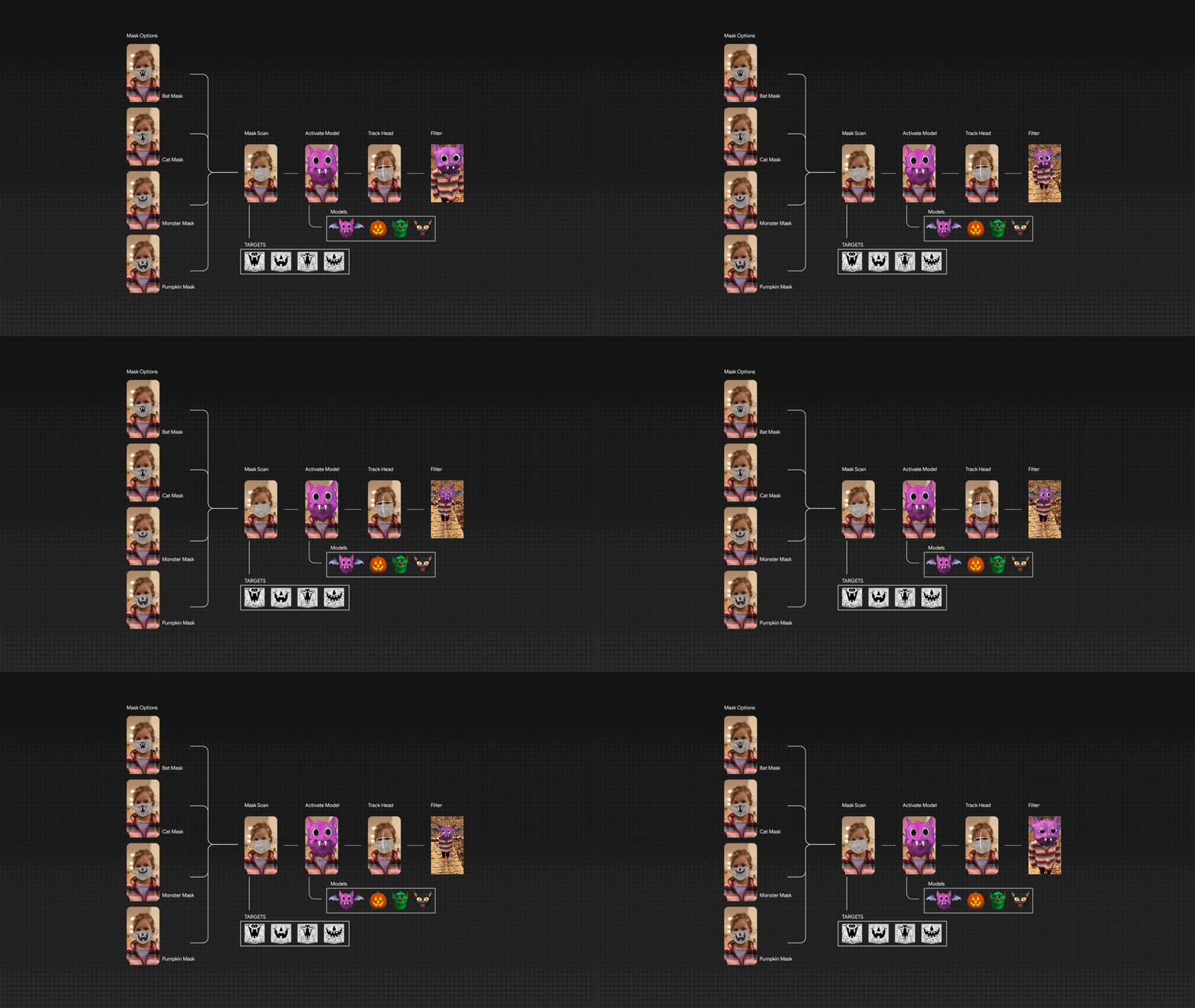


The project required working within significant technical limitations. Early in the pandemic, Spark AR did not include a dedicated mask tracking mode, and traditional face tracking failed once key facial landmarks were covered. To solve this, the system was designed around a hybrid tracking approach.
Printed mask graphics were engineered to function as image tracking markers, allowing Spark AR to recognize and anchor digital content to the physical masks. At the same time, eye-position tracking was used to stabilize head movement and maintain alignment. This combination allowed animated 3D characters to lock convincingly to a child’s face, even when most facial features were hidden.
Custom 3D illustrations were designed specifically for this tracking method, ensuring expressive movement without overwhelming the physical masks. Extensive testing helped balance performance, accuracy, and ease of use across a wide range of devices, including the Pixel 4.
Development

scARy Masks was widely embraced as a creative response to an unusual Halloween. The project encouraged kids to wear physical masks while unlocking digital fun, reinforcing safety through play rather than instruction. Families shared the experience across social platforms, extending the campaign organically.
Beyond the moment, the project demonstrated how physical design, illustration, and AR could work together under real-world constraints. It pushed the boundaries of face tracking at the time and brought some scARy fun back into a year that needed it.
Reception
Next Project:
Contact
BOSTON
144 Lincoln St
Boston, MA 02111
SAN FRANCISCO BAY AREA
San Jose, CA 95136